| Curatorial Practice | Art & Residency | Socially Engagement | Refugee Initiative |
2018.5.19
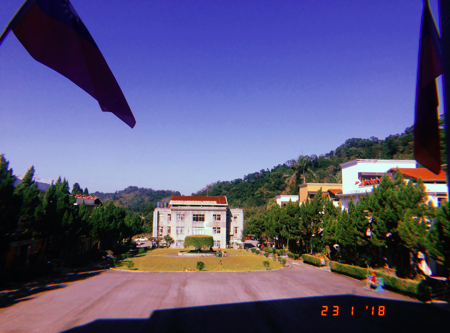
Taipei Veterans Home, Taiwan
Vartmuseum 義家藝館—藝士篇
Us × Them. Story × Memory
Course Instructor and Curator: Wu Dai-Rong
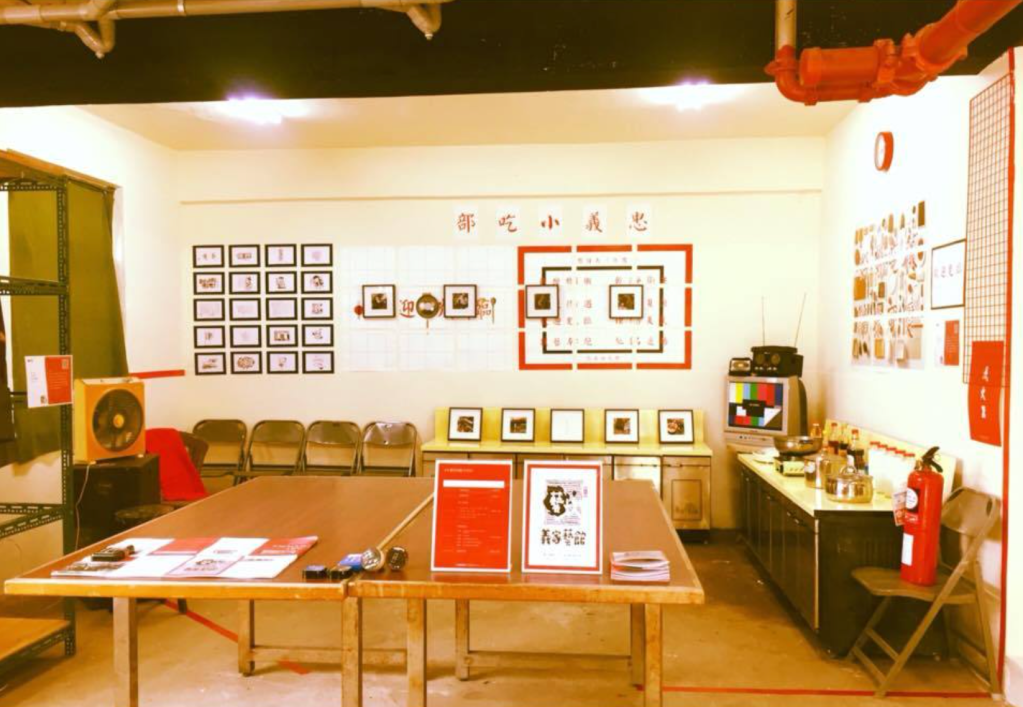
Zhongyi Snack Bar |忠義小吃部
Artists: Shi-Gao Guo, Hsiao-Chi Chu, Shiu-Yuan Yu
A Brief Review of “Vartmuseum (義家藝館—藝士篇)“
Martyr — Home or House? (反共義士—家計畫)is a participatory art project developed in collaboration with Korean War Veterans, initiated in 2014. Through this project, we attempt to recover personal refugee memory — rather than official history — through approaches such as food, colour, and bodily gesture. At the same time, we seek to create a shared space for dialogue, and to bring renewed meaning and vitality to the lives of the veterans themselves.
To verify the identities of the large number of Anti-Communist Heroes who arrived in Taiwan from Korean prisoner-of-war camps, the Taipei Sanxia Veterans Home — originally operated under the Taiwan Provincial Government as the “Anti-Communist Heroes Production and Guidance Centre” — became, in effect, a prison on the threshold of freedom. Within the residential quarters, a “Family History Room” displays various objects that chronicle the Anti-Communist Heroes’ participation in the Korean War and their journey to Taiwan, as well as the institutional history of the Taipei Sanxia Veterans Home. This is the collective experience as made tangible and presented by official channels. Yet for the Anti-Communist Heroes born in the 1920s — who lived through the Second Sino-Japanese War, the Civil War, and then the Cold War era after coming to Taiwan — their entire lives were spent in the shadow of war and the trauma of a shattered homeland. Their collective memory may align with official history to a certain degree, but it also, to a certain degree, diverges from it. Much like the Dheisheh refugee camp in Palestine, the notion of a “permanent temporary residence” — a “vast refugee camp” — seems to have been among the foundational “keywords” of the Anti-Communist Heroes Production and Guidance Centre from the very beginning.
Each return visit brings news of another grandfather’s passing. A living history continues to fade. Returning to the Taipei Sanxia Veterans Home four years later to engage with the grandfathers again, I found myself picking up once more the questions surrounding “memory,” “heritage,” “the person,” and “history” — and how governments so often navigate this kind of “refugee heritage” between nationalism and individual memory. What does “retrospective memory” mean for “refugee heritage” and for the very existence of these veterans’ lives?
The grandfathers’ “recipe letters,” “garden letters,” “image letters,” and “letters of faith” — through symbols such as written words, books, correspondence, and various mementos — evoke, transmit, and gather memory and emotion to preserve the past. Through these traces, we seek to understand the complex relationship between memory, identity, and life itself. Through this remembering, we attempt to reshape the Taipei Sanxia Veterans Home as a space for public dialogue; to locate and define “refugee heritage” within the frameworks of nationalism and wartime thinking; and to bring new value and meaning to existence through the construction of collective memory.
當時為確保大批由韓國戰俘營來台的義士身份,原為台灣省政府所轄之「反共義士生產輔導所」的臺北三峽榮民之家成了這群義士邁向自由的監獄。在家區有一處「家史室」,裡頭各式物件展示,譜出當時反共義士於韓國參戰與投奔台灣的經過,以及台北三峽榮民之家的歷史,這是被官方具現化且呈現的總體經驗;但對於生於1920年代的反共義士們,從抗戰、內戰到後來來台的冷戰時代,終其一生都活在戰爭的陰影及國破家亡的創傷之中,他們的集體記憶也許與官方的歷史某種程度上相合,但卻某種程度上有所距離。如同巴勒斯坦德黑舍,「永久的臨時居所」、「巨大的難民營」似乎也成為反共義士生產輔導所最初的「關鍵字」。
每次回訪,總會得知爺爺離世的消息,鮮活的歷史持續不斷凋零。因此,4年後再進入台北三峽榮民之家與爺爺們互動時,重新拾起對於「記憶」、「遺產」、「人」、「歷史」的疑問,而政府往往如何在國族主義與個人記憶間,處理這類的「難民遺產」(Refugee Heritage),思考「回溯記憶」對於「難民遺產」與義士們「生命存在」的意義。屬於爺爺們的「食譜家書」、「花圃家書」、「影像家書」、「信仰家書」等,透過一些符號如:文字、書籍、信函、各式紀念品等,喚起、傳達與凝聚記憶與情感來儲存過去,以此瞭解記憶、身份、生命之間的複雜關係。透過這些記憶重塑台北三峽榮民之家之公共對話空間、定位於國族主義與戰爭思維下的「難民遺產」(Refugee Heritage),並集體記憶建構帶來新的生命存在的價值。
Zhongyi Snack Bar |忠義小吃部
Artists: Shi-Gao Guo(藝士), Hsiao-Chi Chu, Shiu-Yuan Yu
2018
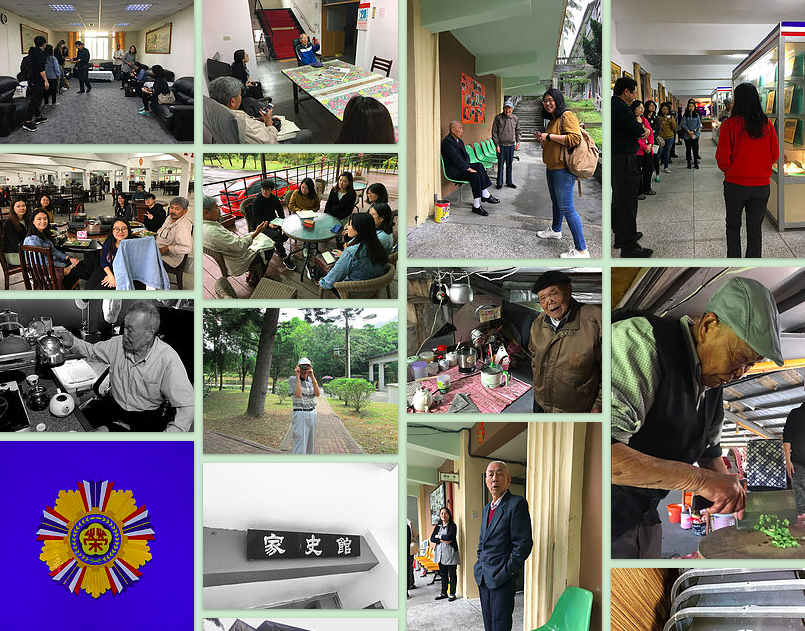
Shi-Gao Guo, now 92 years old, once served as a merchant ship chef after retiring from the military. After moving into the Taipei Veterans Home, he also supported the external operations of the Yuanlou Snack Bar. With exceptional culinary skills and a passion for calligraphy, Guo prepares dishes such as zhajiang noodles and dumplings with effortless mastery and great precision—his cooking resembling another form of writing. To those of us hoping to learn and carry on his craft, he has generously shared his knowledge without reservation. His rooftop space has also become an ideal place for our collective creation and exchange.
九十二歲的郭仕高,軍中退役後曾擔任商船大廚,入住臺北榮家之後也曾支援圓樓小吃部的對外營運。郭仕高廚藝精湛,雅好書法,舉凡炸醬麵或水餃,總是信手拈來,且極其講究,彷彿另一種廚藝的書寫,對於想承接其好手藝的我們,更是毫無保留地給予指導。他的天台,也成為我們共同創作與交流的最佳空間。
Us × Them. Story × Memory
From 2014, faculty and graduate students of the Graduate Institute of Arts and Humanities Education at Taipei National University of the Arts engaged in social practice alongside twelve Anti-Communist Heroes of the Korean War residing at the Taipei Veterans Home, through a curriculum plan integrating participatory art. During the first two years, we conducted fieldwork, mapped resources, and narrowed our focus — until, in 2016, the overall teaching and creative project found its defining direction: to transform the veterans’ home into an ecological museum of art. And so Martyr Art Museum was born.
The concept of the écomusée originates in French museology. Despite its name, “ecological” here refers to “community” — a current of thought that uses the museum as a means of gathering social consensus from the ground up. In 2016, through a public presentation held in conjunction with International Museum Day, the Martyr Art Museum teaching and creative project proposed a new possibility for the Taipei Veterans Home beyond its role as a care facility: as a site for building collective meaning. The curatorial team, formed by students in the course, divided the southern residential area of the Taipei Veterans Home into three exhibition zones — the “Loyalty and Righteousness Garden,” the “Family History Museum,” and the “Art and Joy Workshop” — presenting staged research and creative outcomes through object display and guided tours.
Two years later, the 2018 Martyr Art Museum shifted its focus from objects to people. The curatorial team concentrated on revealing the hidden artistic dimensions of the veterans as seen through their own eyes — allowing the veterans themselves to become “artists.” Through the process of co-creation, the artistic character of this écomusée was written anew. Looking back across five years, faculty and students have continued to search and experiment through teaching and creative practice. It is the trust and generosity of the Taipei Veterans Home that has allowed us to keep moving forward. And it is the richness of the Anti-Communist Heroes’ life experiences that has nourished each successive cohort of students from diverse backgrounds — through conversation, collaboration, and co-creation, opening this project into ever wider dimensions. As Anti-Communist Hero Wang Bu-Zu once said: “The slope is steep, but we have always kept moving forward.”
我們×他們.故事×記憶
2014年起,國立臺北藝術大學藝術與人文教育研究所師生,透過結合參與式藝術的課程計畫,與臺北榮譽國民之家中的12位韓戰反共義士,進行社會實踐。計畫的前兩年,我們進行田野踏查、盤點資源、縮小議題,終於在2016年為整個教學暨創作計畫訂定了明確的基調:將義士的家轉化為一座藝術的生態博物館,《義家藝館》一名於焉誕生。
生態博物館(écomusée)的概念源自法國博物館學界,雖名之為「生態」,實則指向「社區」,是一股透過博物館由下而上凝聚社群共識的思潮。2016年的《義家藝館》教學暨創作計畫,藉由國際博物館日活動的公開發表,試圖提出臺北榮家作為安養機構以外的另一種可能性——以凝聚社群共識。由修課同學組成的策展團隊,將臺北榮家的南家區劃分出「忠義公園」、「家史館」和「藝炔工作室」三大展區,依循物件展示與分區導覽,呈現其階段性的研究與創作成果。
時隔兩年,2018年的《義家藝館》將關注的焦點從物轉向人。今年的策展團隊聚焦於呈現他/她們眼中義士不為人知的「藝」面,讓義士成為「藝士」,藉由共同創作的歷程,書寫這座生態博物館的藝術性。回顧過去五年,我們師生不斷地在教學與創作的歷程中摸索與嘗試。因為合作對象臺北榮家的信任與包容,我們得以繼續前行;而反共義士們豐厚的生命閱歷,則滋養了每一年各自背景歧異的修課同學。透過對話、合作與共創,這個計畫因而開展了更豐富的面向。借用反共義士王步祖所說:「上坡有點陡,但我們一直在前行」。

 織事|Weave the Edge