| Curatorial Practice | Art & Residency | Socially Engagement | Refugee Initiative |
2014.9.2-2014.9.28
Banqiao 435 Art Zone, Taiwan
Bodily Folds: A Cross-generational Artistic Practice |疊合景觀-跨時代的藝術實踐
Curator: 朱筱琪 Hsiao-Chi Chu
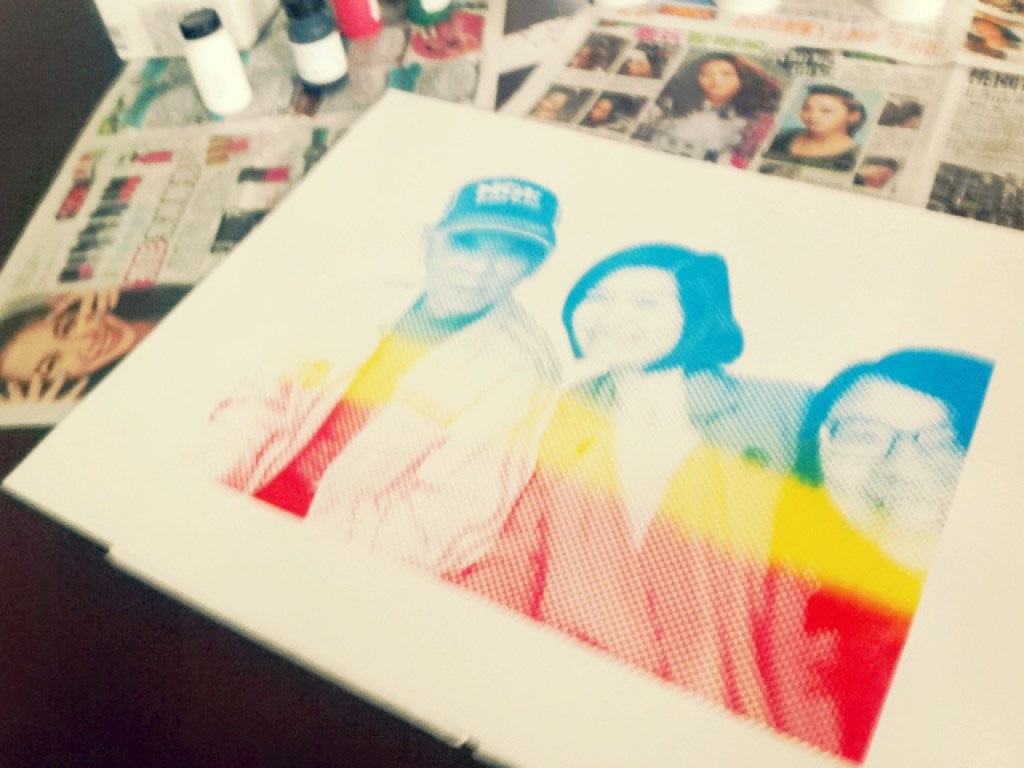
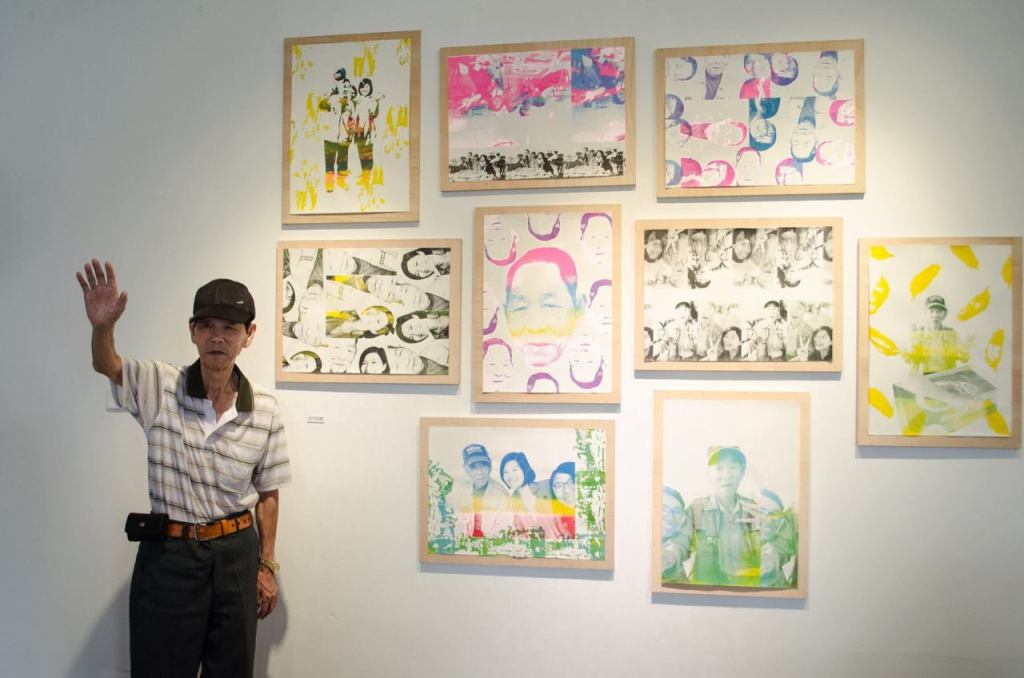
Hidden / Inducing the Body 隱/引繪體
Artists: 張爺爺 Jing-Yuan Zhang, 朱筱琪 Hsiao-Chi Chu, 顧詠琪 Yong-Chi Ku
A Brief Review of “Bodily Folds: A Cross-generational Artistic Practice” & FB event page
Martyr — Home or House? (反共義士—家計畫)is a participatory art project developed in collaboration with Korean War Veterans, initiated in 2014. Through this project, we attempt to recover personal refugee memory — rather than official history — through approaches such as food, colour, and bodily gesture. At the same time, we seek to create a shared space for dialogue, and to bring renewed meaning and vitality to the lives of the veterans themselves.
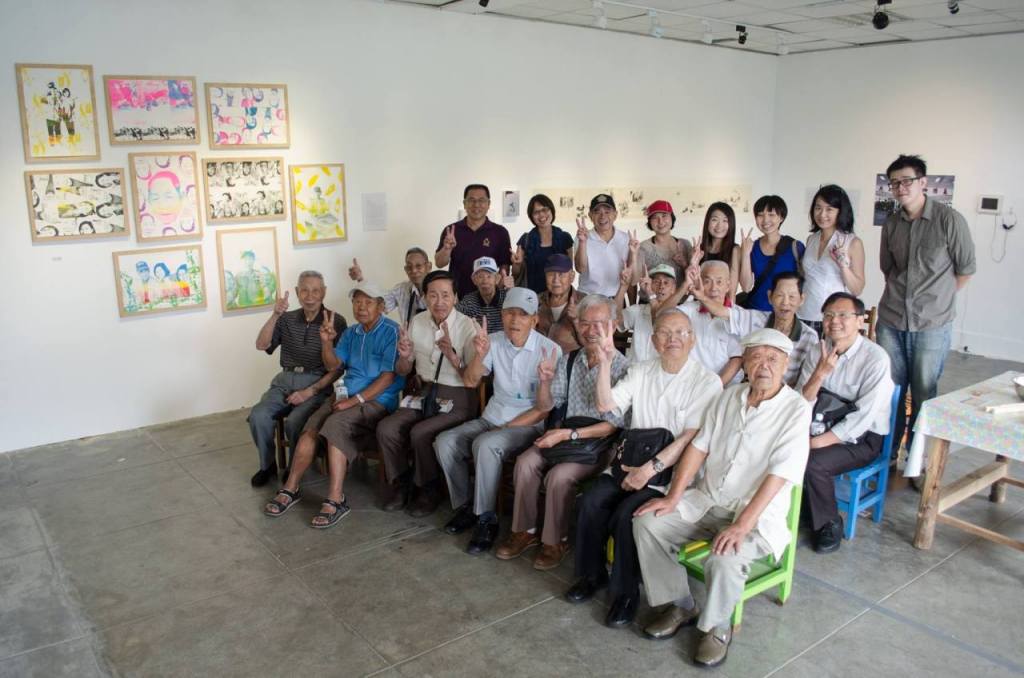
Can you imagine the intimate relationship between the body and art? Led by Assistant Professor Wu Dai-Rong of the Graduate Institute of Arts and Humanities Education at Taipei National University of the Arts, a group of graduate students undertook a semester-long “participatory art project” with six Anti-Communist Heroes of the Korean War residing at the Taipei Veterans Home in Sanxia. Through art, the students wove together the life stories of these veterans, giving rise to the exhibition Bodily Folds: A Cross-Generational Artistic Practice.
Bodily Folds: A Cross-Generational Artistic Practice will be held from September 1 to September 28, 2014, at the 435 Art Zone in Banqiao, New Taipei City. The public is warmly invited to experience the deep longing for hometown, youth, and human connection that lives within the hearts of these Anti-Communist Heroes of the Korean War.
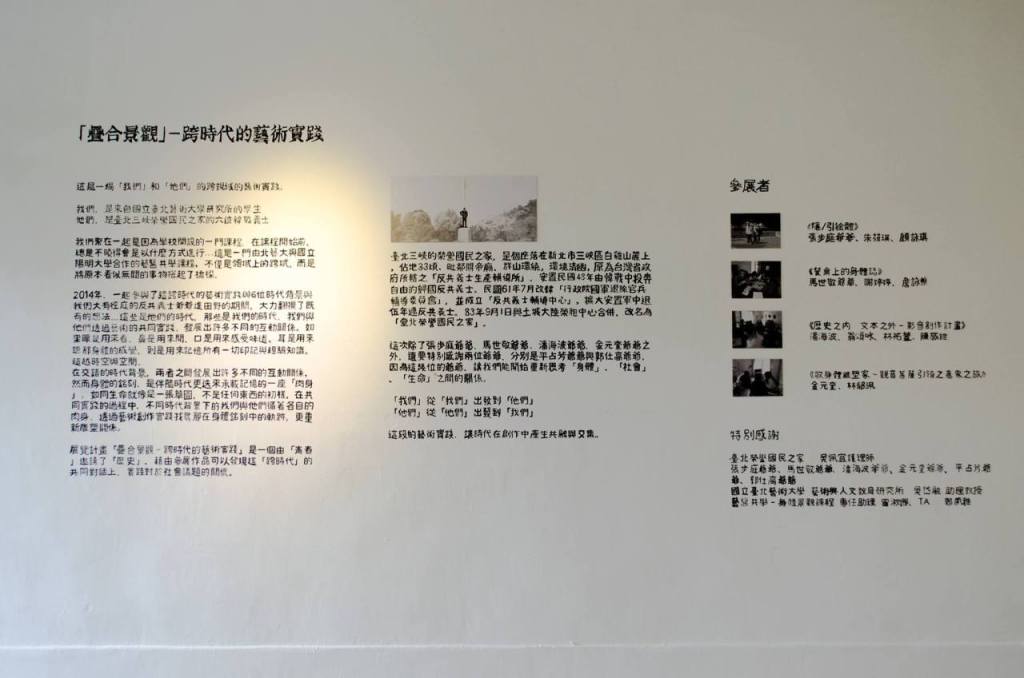
This exhibition was independently planned by graduate students from the Graduate Institute of Arts and Humanities Education and the Master’s Programme in Fine Arts, enrolled in the course “Body Landscape.” The participating students developed their work around an awareness of bodily perception, bodily experience, and bodily knowledge, using these as the central axis for a cross-generational artistic practice with the Korean War veterans. Four distinct art education projects are presented:
— Chronicles of the Body at the Table by Zhan Yong-Zhen, Xie Ting-Ting, and Uncle Ma — Beyond History — Traces of a Life Passed: A Video Art Project by Lin You-Xuan, Weng Song-Yong, Chen Lü-Wei, and Uncle Pan — Homage to Uncle Xiao Kui, Sculptor of the Body — A Vision Journey Led by Guanyin Bodhisattva by Lin Yu-Pei and Uncle Jin — Hidden / Inducing the Body by Chu Hsiao-Chi, Gu Yong-Qi, and Uncle Zhang
Through the narrative of the exhibition, visitors are invited to explore how the graduate students learned history and sculpted relationships through artistic practice. Workshops held during the exhibition period also welcome the public to participate — to layer together bodily experience and the emotions of a life fully lived.
能想像身體與藝術之間的緊密關係嗎?由國立臺北藝術大學藝術與人文教育研究所吳岱融助理教授所帶領的研究生,歷經一學期與三峽臺北榮譽國民之家六位韓戰反共義士的「參與式創作」,除透過藝術統整義士們的生命故事,並延伸出此「疊合景觀-跨時代的藝術實踐」之展覽計畫。「疊合景觀-跨時代的藝術實踐」將於2014年9月1日到9月28日在新北市板橋435藝文特區空間展開,邀請民眾一起感受潛藏在韓戰反共義士心中對於家鄉、青春與人際互動的嚮往!
本次「疊合景觀-跨時代的藝術實踐」由藝術與人文教育研究所與美術學系碩士班修習「身體景觀」的同學獨立規劃,參展研究生以身體覺察、身體經驗乃至身體知識的關注,發展出與韓戰反共義士們跨時代藝術實踐的主軸,並依此呈現出四組不同的藝術教育實踐參與展覽計畫,分別為:詹詠幀、謝婷婷與馬伯伯的「餐桌上的身體誌」、林祐萱、翁頌詠、陳旅維與潘伯伯的「歷史之外-走過留痕影音創作計劃」、林郁珮與金伯伯的「敬身體雕塑家小奎伯伯-觀音菩薩引領之意象之旅」與朱筱琪、顧詠琪與張伯伯的「隱/引繪體」。民眾可以透過展覽敘事,探索研究生們如何在藝術實踐過程中學習歷史、雕塑關係,也歡迎一同參與展覽期間所舉辦的工作坊,共同疊合身體經驗與生命情感。
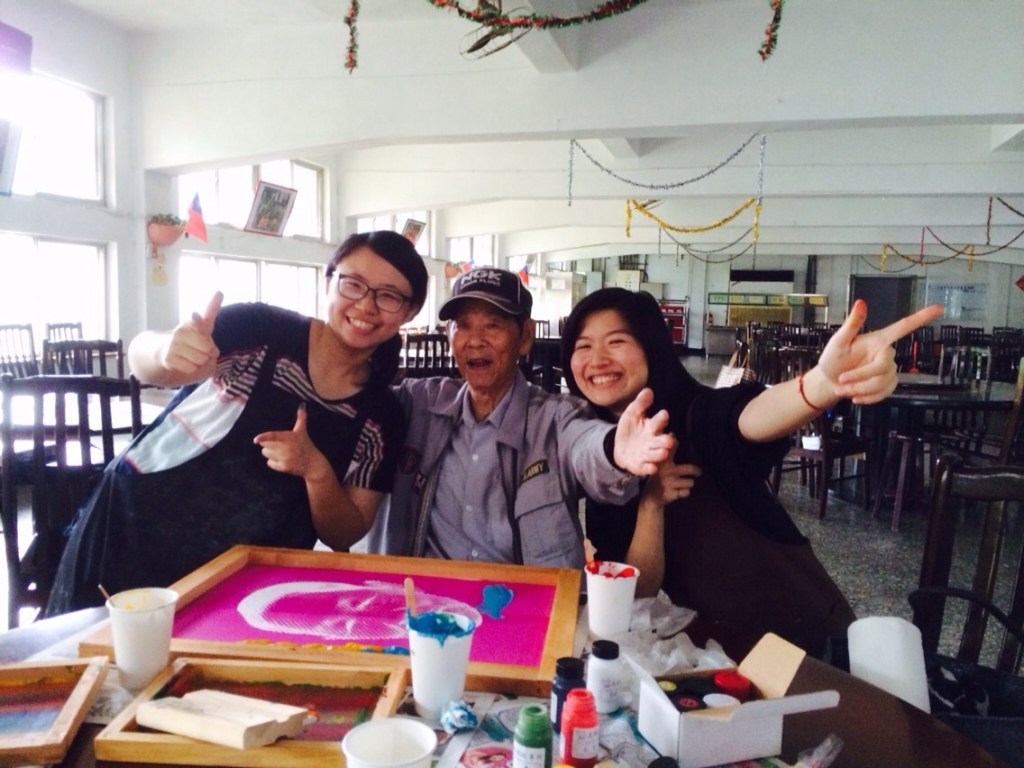
Hidden / Inducing the Body 隱/引繪體
Artists: Jing-Yuan Zhang, Hsiao-Chi Chu, Yong-Chi Ku
I heard that Grandfather’s eyesight is getting worse and worse… If one day he can no longer see… (silence) But Grandfather remains optimistic about the future — and so steadfast.
Though we first came to the Veterans Home because of the bodily imprints left by the experience of war — inscribed, engraved — as the process unfolded, Grandfather’s life imprints and experiences gradually came to shape us in turn. Perhaps what we see is in black and white, but what we experience is in full colour.
In the course of this project, the greatest challenges we encountered were: Grandfather’s physical condition and scheduling constraints; his degree of openness to and understanding of artistic creation; the distance involved, which made repeated visits and discussions difficult; and the questions that arose along the way. These factors required us to adjust the project as it unfolded — and in doing so, to reconsider the relationship between creative practice and the human being at its centre. When the concerns at stake are bound up with people, society, and environment, learning how to enter and how to step back is itself something we must learn.
The differences in perspective and life experience between us led us, in the end, to a very simple means of giving form to Grandfather’s life — so that more viewers, more curious members of the public, might see it. This became an imprint not only for Grandfather, not only for us, but within the larger flow of history itself.
Hidden / Inducing the Body — it is not only about “hidden drawing.” Gradually, it transformed: Grandfather began to guide us, and we began to guide Grandfather. The relationship between subject and object became mutual, shifting, reciprocal — and so it became Inducing the Body. This state of things will continue to carry forward through the exhibition and through publication.
聽說爺爺的眼睛越來越不好了…
假使哪天看不見…(沉)
但爺爺依舊樂觀看待未來
並且如此堅毅
雖然我們一開始到榮家
是因為戰爭的經驗
所產生的身體印記,銘刻…
但在過程中 漸漸爺爺的生命印記與經驗 更影響著我們…
也許看到的是黑白,但體驗的是彩色的…
在這次創作計畫中,遇到最大的困點點分別有:爺爺的身體狀況與時間安排、對於藝術創作的接受度與認知、路程較遠,較難多次與爺爺討論、後續問題…這些使得計畫在執行的過程中而有所調整,這也讓我們重新思考創作與人之間的關係,在關注的議題與人、社會、環境有所關係時,該如何進入與抽離也是我們該學習的。
觀點的差異與生命經驗的差異,讓我們這次透過一個很簡單的方式將爺爺的生命轉化出來,讓更多觀者、有興趣的民眾看到,這也成為不只是對於爺爺、我們,乃至於歷史洪流中的一個印記。「隱繪體」,不只是「隱繪」,而漸漸的轉成爺爺「引導」我們,我們「引導」爺爺,相互主客體的關係,成了「引繪體」。這個狀態,也將藉由展覽、出版而繼續延續下去。

 織事|Weave the Edge