Author/ Chi Chu
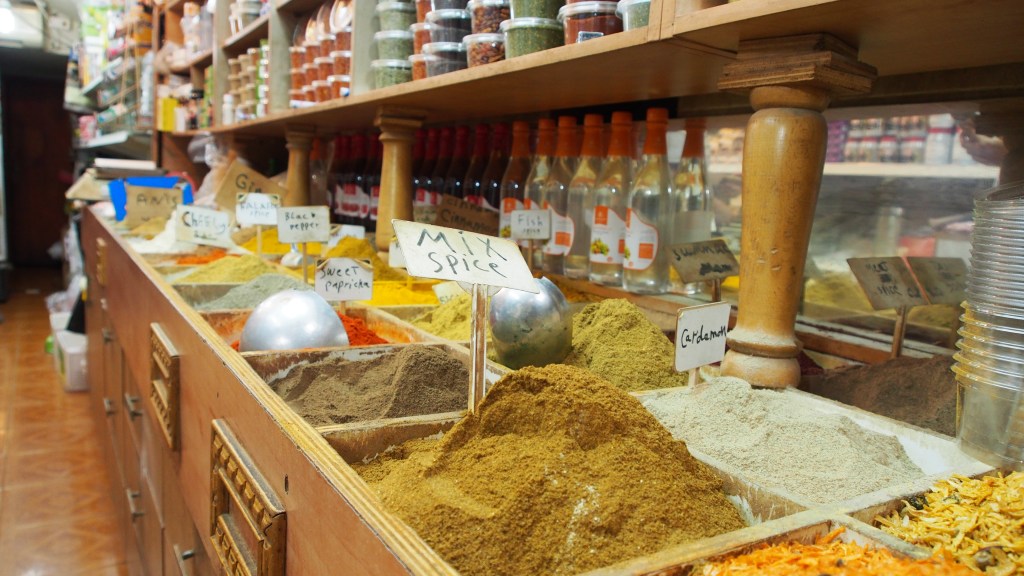
Food constitutes ‘a highly condensed social fact’ and ‘a marvellously plastic kind of collective representation’ (Appadurai, 1981, p. 494). This research project begins to discuss the relationship between food, collective memory and identity for Palestinian diasporas overseas through the concept of daily food and commensality Food has come to represent the juxtaposition of rights in daily life: strategic (the system of the nation-state, such as large-scale suppression) and tactical (people’s guerrilla resistance) (de Certeau, 1984). Historical Palestine has experienced many ethnic settlements and nations and is deeply affected by political and social divisions, conflict and violence. The food culture has become not only the core of family, the nation-state, and identity but also the medium of political ideology. It is also the thrust of living together and erasing borders. Therefore, this ethnography will present perspectives on the Palestinian cuisine of Palestinian diasporas with regards to individual identity and collective memories through the use of interviews, participant observation, and detailed discussion.
In history, Palestinian food has been merged with the food culture of other regions and reinterpreted de-Palestinianization due to migration and conflicts. Belasco (2008) states that the same story of ‘delocalization’ is everywhere. It means that one ethnic group would invade, colonize or dominate another ethnic group/nation-state. Hobsbawm (1993) also states that the distinctiveness of creation is that the correlation between such traditions and history is ‘artificial’. Briefly, the created tradition is a response to a new situation, it appears in a form related to the past, or it builds its past in a repeating manner in a similar nature of the obligation. Hence, what is Palestinian food culture after decades of separation? Halbwachs (1992) states that external values affect individuals in several ways. Also, the history of ethnic groups shapes their identity under the social structure and memories become the path of history. As mentioned above, when encountering the decades of separation from the land and other members of the ethnic group for the Palestinian diaspora, the transformation of individual identity or collective memory tends to be significant. Therefore, the following will present interviews on how Palestinian food provokes the collective memory of Palestine (land).
Part I: Participant observation
I joined a Palestinian supper club on Friday, Nov. 8 in 2019, at Café Palestina in north London which endorses ‘commensality’. In the beginning, I thought every participant would share food on the same table. However, participants used different tables at the supper club, whose members are western people, not Palestinians. They had their dishes set, and they included falafel, hummus and a few salads, and there was no conversation between each table. The scene was similar to dinner at a restaurant. According to one member of the Palestinian diaspora, H (2019), sharing food is the core concept of Palestinian food culture. However, it was difficult to find any characteristics of the concept of ‘commensality’ during the whole process of the Palestinian supper club. Moreover, participants left directly after finishing their meals. In the whole process, the staff of Café Palestina did not engage in the supper club or have conversations with participants.
In order to understand the core idea of the Palestinian supper club, I attempted to interview the owner and staff of Café Palestina. However, I met several challenges. In the beginning, making contact to arrange the meeting went smoothly, however as time went on, the owner started to defer the date of our meeting because there would be several events in the following weeks. Ultimately, I have not done any interviews with the owner or staff. In terms of participant observation, significantly, the supper club omits not only the sharing concept of Palestinian food culture but also the main dishes of Palestinian cuisine.
Part II: Interviews
I encountered challenges not only when conducting participant observation, but also when interviewing members of the Palestinian diasporas who reside in London. The difficulties were like disconnections or asking the payments for interviews. Therefore, in the middle of the research process, I decided to change the main research targets to members of the Palestinian diaspora who live ‘overseas’ and have done three interviews with people who live in Turkey, Qatar and Jordan, respectively. Part II is divided into three sections: the memory of the land, the role of Palestinian cuisine, and the process of the blending, occupation and labelling. Each section aims to present the perspectives on Palestinian cuisine held by Palestinian diasporas.
The memory of the old city of Jerusalem
After visiting the Middle East last year, I walked down a London street and smelled the flavour of falafel at a church near King’s Cross Station. I spoke to the owner of the falafel shop, who was Palestinian. After exile since 1948, many Palestinians moved overseas, including to the UK. The familiar flavour took me back to those days of my trips in the old city of Jerusalem, which was one trade stop on the incense route from Yemen and Oman, through historical Palestine, to the Mediterranean. The old city of Jerusalem is also the principal city of historical Palestine. Arab merchants have sold myrrh, frankincense, spices and various Arab cuisines along the route. In the old city, there is evidence that vendors sell various Middle Eastern foods, such as falafel (فلافل), hmmus (حُمُّص), and kebab. Hence, Palestinian cuisine is merged with several food cultures of other regions in the land, Historical Palestine.
Over the decades, conflict affected Palestinian history and food was an essential part of life. Badkhen (2010) describes her experience in Afghanistan and those of the people she interviews on the battlefield in her book Peace Meals: Candy-Wrapped Kalashnikovs and Other War Stories. Even though the flames of battle raged everywhere, residents still invited her to have dinner at home and prepare dishes for festivals. Accordingly, food becomes a tactic to maintain the happiness of daily life. The same scenes occur in Palestine and with Palestinians. In my interview with H (2019), who is from Gaza, he said, Maqluba is a classic Palestinian dish that is not available elsewhere. We eat Maqluba to celebrate whatever the status is worst. Maqluba means pot in Arabic, and is mixed lamb, rice, garlic and various spices in a copper pot cooked in an oven. It is served with tomato salad and yoghurt. Traditionally, it is a party food. After meals, it is the dessert and coffee time, featuring Kenafa, ataif or Ka’ek bi ajwa, followed by Turkish coffee with cardamom (qahwe) or mint tea (shay wa nana). F (2019), who lives in Turkey, says that food is the core of life and the representation of our homeland for Palestinians.
The role of Palestinian food in Palestinian culture
A second generation member of the Palestine diaspora, M, now lives in Jordan. He believes the essential idea of Palestinian traditions is hospitality. Everyone offers a cup of tea or coffee when passing a store or home. Palestinians are known for their delicious food, drinks, sweets, olive oil, herbs, Waraq Inab (made from ma’loubeh, grape leaves, eggplant, and zucchini), lentil soup, and desserts like Kanafeh. For over 1200 years local olives are still producing the best olive oil in the world (M, 2019).
Identity includes factors such as taste, family and ethnic background, and individual memories which are the association of particular food and past events. The cultural identity of food includes widely shared values and ideas, and specific preferences and practices that set a community apart from others. Following the approach of anthropologists Peter Farb and George Armelagos (1980, p. 190-98), ‘a broader perspective is taken by this essay, one that advocates that all groups have a discernible cuisine that is reflected in a set of shared rules, customs, communication and habits. (The word ‘culture’ has a similar meaning. It extends beyond Shakespeare, performance, and art, and contains a standard set of ideas, imaginations, and values that express and influence the way people think and act.)’ (Belasco 2008, p.15). A (2019), shares thoughts about the cultural role of Palestinian food: ‘I hate to eat alone and never eat alone. Food is a medium of communication between family and friends, the dining table becomes an essential place for sharing. For example, every weekend, especially on Friday, we always make traditional foods, such as mansaf and makluba, which is called slow food by A.’ No matter what meal you have with colleagues, family or friends, people always enjoy food slowly and share conversations about housework, work, social issues whilst eating. The meeting of breakfast and the commensality of the dinner play an important role in Palestinian food culture. The meaning and feeling of food is my childhood memory with family or specific scene (H, 2019). Those processes construct Palestinian identity and memory of the land and cohere the ethnic group. Similar Palestinian food culture can still be tasted at the homes of Palestinian diasporas. Food is kind of memory, a sense of belonging, and identity (H, 2019). For them, food is always the identity of the homeland.
The process of the blending, occupation and labelling
As mentioned above, food is one way to convey status symbols, history, culture and values. It means that it is a common topic among all parties, invoking the shared history and culture of Arabs and Jews after a thousand years of integration. This is easily forgotten when politics is divisive. Even though conflicts between different ethnic groups continue, there are many chefs from all ethnic groups that, by cooking together, use food as a medium to bridge religious and political differences in history, traditions and cultures. A postcard that impressed me shows falafel with a Palestinian flag covering the Israeli flag (Figure 1). Hence, I asked H for his opinion on the ability of food identity.
Anderson (2006) states in Imagined Communities: Reflections on the Origin and Spread of Nationalism that the concept of the nation-state actively promoted in a specific homeland can make the community think themselves part of it. Hobsbawm (1992) also states that individuals are constantly reminded to be part of the state by various symbols in specific territories. During the wars and conflicts between Palestine and Israel, whatever the ethnic group is, Palestinians in exile keep sharing the traditions and cultures of Palestine. Jews in the Nazi concentration camps shared matzo to gain emotional support. Therefore, food is significant for ethnic identity, but it can also be a form of defamation.
Recall the talking with one Jewish A (2019), and we also have falafel because Jews lives in the land for thousand years. Therefore, the food is merged different cultures and traditions of ethnic groups in historical Palestine. H said that Israelis are trying to steal Palestinian culture and identity, and everything, from land, history, folklore, traditional costumes and food. H gives the example that they describe that fried falafel, Arabian salad and tahini are Israeli. Food is a representative cultural symbol and the identity of the nation-state, which defines who we are, where we come from, and what we want to be. ‘Food exposes our souls,’ says sociologist Gary Alan Fine. (Cited in Belasco 2008:1). Regardless of the people who originally lived in historical Palestine for thousands of years or the later settlers, the diets they eat in the present are similar. As a result, the boundaries of traditional culture/ rooted identity between ethnic groups seem to have been blended gradually. The effects of assimilation have also been observed on the Palestinian diaspora, due to the influence of the surrounding society. The identity of Palestine for new generations has weakened gradually and traditional Palestinian food has been replaced by other food, especially if parents have not shared the history, memory, and identity with their offspring (H, 2019).
Conclusion
Overall, as mentioned above, the problem of ethnic identity in food culture has also become more pronounced due to conflicts and the lack of resources. Food culture seems to be a silent voice, but it is a medium that can expose the history and social development. Food is often framed as authentic through its connection to specific history and ethnic/ cultural traditions. This connection not only proves that food can withstand the test of time, it is considered to be always suitable for consumption, not a temporary dietary style, but is also true to its origins and maintains its original flavour. The reference to historicism and ethnic, cultural traditions appear in this dimension of authenticity (Johnston, 2014). Through repetition and inheritance, ethnic groups continuously shape their traditions and collective memories. However, after Zionism came to Historical Palestine, the original cultures and traditions have gradually been replaced by a nation-state and another ethnic identity. The two sides of the separation wall and the wall between different nation-states caused by the territory or borders have gradually been differentiated.
Consequently, nowadays, due to the political situation, food culture is involuntarily linked to the manipulation of nationalist hegemony. Ultimately, it affects people’s values and solidarity with the ethnic group. However, according to Bakhtin, ‘Carnival is in its entirety universal and all-inclusive, and everyone needs to join intimate communication. The square is a symbol of nationality. The carnival square is for the carnival performances with symbolic meaning’ (Cited in Liu, 2005, p.269). Thinking with the idea of Bakhtin, Palestinian food seems to be a public space, and people can freely enjoy the senses, the patterns of life and beliefs constructed by specific institutions, and create everything from the carnival. Moreover, there are still too many unseen memories and micro-histories that need to be pieced together.
Fig 1
Bibliography
Anderson, A. (2006). Imagined Communities: Reflections on the Origin and Spread of Nationalism. UK & USA: Verso.
Appadurai, A. (1981). Gastro-Politics in Hindu South Asia. American Ethnologist, 8(3), 494-511.
ASA Ethical Guidelines. (2011). Retrieved from : https://www.theasa.org/downloads/ASA%20ethics%20guidelines%202011.pdf.
Badkhen, A. (2010). Peace Meals: Candy-Wrapped Kalashnikovs and Other War Stories. US : Free Press.
Behar, R. (1996). The Vulnerable Observer. US: Beacon Press.
Belasco, W. (2008). Food: The Key Concepts. UK: Berg Publishers.
BibleGateway (n.d.). Retrieved from: https://www.biblegateway.com/.
CADFA (Camden Abu Dis Friendship Association) (2014). Retrieved from http://www.cadfa.org/.
Café Palestina (n.d.). Retrieved from https://cafepalestina.co.uk/.
de Certeau, M. (1984). The practice of everyday life. CA: University of California Press.
Dowson, N. & Sabbah, A., ed. (2010). Stories from our Mothers. UK: CADFA.
El-Haddad, L. & Schmitt, M. (2016). The Gaza Kitchen: A Palestinian Culinary Journey. US: Just World Books.
Goody, J. (1982). Cooking, Cuisine and Class: A Study in Comparative Sociology. Cambridge : Cambridge University Press.
Halbwachs, M. (1992) On Collective Memory, trans. and ed. by L. A. Coser. Chicago: The University of Chicago Press.
Harvey, D. (2008) . The History of Heritage. In B. Graham and P. Howard(Ed.), The Ashgate Research Companion to Heritage and Identity (pp. 19-36). UK : Routledge.
Hobsbawm, E. (1992). The Invention of Tradition. Cambridge: Cambridge University Press.
Johnston, J. (2014). Foodies: Democracy and Distinction in the Gourmet Foodscape (Cultural Spaces). US: Routlefge.
Kerner, S., Chou, C. & Warmind, M. (2015). Commensality: From Everyday Food to Feast. London: Bloomsbury Academic.
Khan, Y. (2018). Zaitoun: Recipes and Stories from the Palestinian Kitchen. UK: Bloomsbury.
Liu, K. (2005). Bakhtin Dialogues and Cultural Theory. Taipei: Rye Field.
Monyer, H. & Gessmann, M. (2015). Das geniale Gedächtnis: Wie das Gehirn aus der Vergangenheit unsere Zukunft macht. Munich: Germany.
Okely, J. (2012). Anthropological Practice: Fieldwork and the Ethnographic Method. London and New York: Bloomsbury.
Proust, Marcel (1934). Remembrance of Things Past, Vol. 1, trans. C. K. Scott Moncrieff. NY: Random House.
Samudra, J. K. (2008). Memory in our body: Thick participation and the translation of kinaesthetic experience. American Ethnologist, 35(4), 665-681.
Sutton, D. (2001). Remembrance of Repasts: An Anthropology of Food and Memory. Oxford & NY: Berg.
Till, K.E. 1999. Staging the Past: Landscape Designs, Cultural Identity and Erinnerungs politik at Berlin’s Neue Wache, Ecumene, 6(3), 251–283.
UNESCO (2019). Memory of the World. Retrieved from : https://en.unesco.org/programme/mow.
Young, J. (1993). The Art of Memory: Holocaust Memorials in History. UK: Prestel.
Appendix
Interviewers
H: Palestinian Diaspora lives in Qatar
F: Palestinian Diaspora lives in Turkey
M: Palestinian Diaspora (second generation) lives in Jordan
A: Palestinian lives in Ramallah
Jewish A : Jewish lives in Eilat
Interview Transcription (One of all interviews)
Name: Hosam Wahbeh
Palestinian Diaspora from Gaza, and now live in Qatar
Interview Time: 20191209 17:00 -17:30 (UK time) through internet phone call
C: Hello
H: I am Hosam Wahbeh from Gaze. I had lived, studies (BA, MA and PhD) and worked as a professor in Germany for 20 years at age 18. However, around six years ago, I got an offer of Aljazeera to organise film workshop and journalist. So I moved to Qatar.
C: After these years, do you want to go back to Gaza?
H: Yes, I would like to visit my family. The last time was 12 years ago. Now the political situation by Israeli side does not allow me to visit even though I have Germany Passport.
C: Up till now, do you think you get used to the others’ food or cultures more than the cultures and food from your hometown?
H: Yes. I think it is not very easy to forget childhood memories even though I have lived in other countries for the decades. Also, because of that, I’m lucky to have Palestinian food with some friends.
C: So do you still cook Palestinian food by yourself?
H: Yes, actually, I cook it very well.
C: Can you share some food you cook before?
H: Maqluba, Maluheya, Hummus, Felafeh, Bamiya… Typical Palestinian foods are Maqluba and Maluheya, which are my favourites.
C: Can you share your perspectives of Palestinian food?
H: For example, you can find Maluheya in Egypt or Syria. But I prefer for the Palestinian way to make it, like a soup. The reason is that the meaning and feeling of food is my childhood memory with family or a specific scene. That’s why my preference is fixed into the Palestinian frame.
C: Do you think is there any gaps between generations of Palestinian Diaspora?
H: In my perspectives, for example, I was grown up in Palestine, so I still have the memories of Palestine. Palestine is a feeling for me. However, for those younger generations, they were grown up in other countries. Even though their family share the cultures, traditions and food with them, they cannot really/fully experience what I had experienced before. Palestinian food somehow maybe just food for those younger generations.
C: Some Palestinian diaspora who were born overseas share they have memory with Palestinian food.
H: Maybe they connect identity and nationality to Palestinian food. But for me, that kind of experiences are different from someone who was grown up in Palestine, the motherland and a place.
C: So for you, food is a kind of memory, a sense of belonging, and identity.
H: Yes. It’s interaction. I can feel my country through food.
C: Do all of your family still live in Gaza?
H: The half of them live in Gaza, and another half live in Ramallah.
C: Now, it is challenging to visit Gaza from Ramallah.
H: Yes, after intifada, it has been difficult. So my family members have been hard to meet each other for 18 years.
C: Is there any differences of Palestinian food between Gaze and the West Bank?
H: The food in Gaza is more salty and spicy, like Indian food. Another example is like Masafeh. We don’t have it in Mansafeh, but you can find it in the west bank.
C: So does the Egyptian food influence the food in Gaza?
H: Yes, I think so.
C: How do people manage food every day under the lack of the materials, resources and ingredients?
H: Most of the ingredients are from Israel, especially water. Gaza has salty water. But sometimes UN sends aid to Gaza. No one uses water from the pipe of houses.
C: Do you invite others to have Palestinian food in Qatar?
H: Yes, I would like to enjoy food with them and make this gathering as a home and solidarity. Here is not many Palestinians, even though I have lived here for six years. Up till now, I haven’t met any Palestinian.
C: What kind of relationship is between Gaza and the West Bank?
H: Even though the separation caused by political status and territory, those people who experience similar situations, occupation. Hence, we still can feel Palestine.
C: Thanks for your sharing.
H: You’re welcome.
 織事|Weave the Edge
Leave a comment